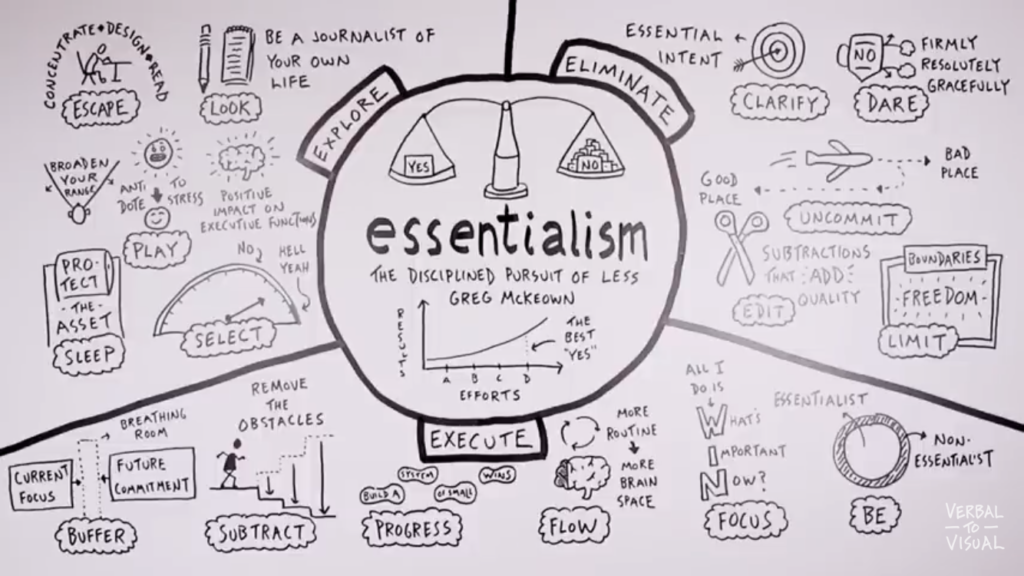
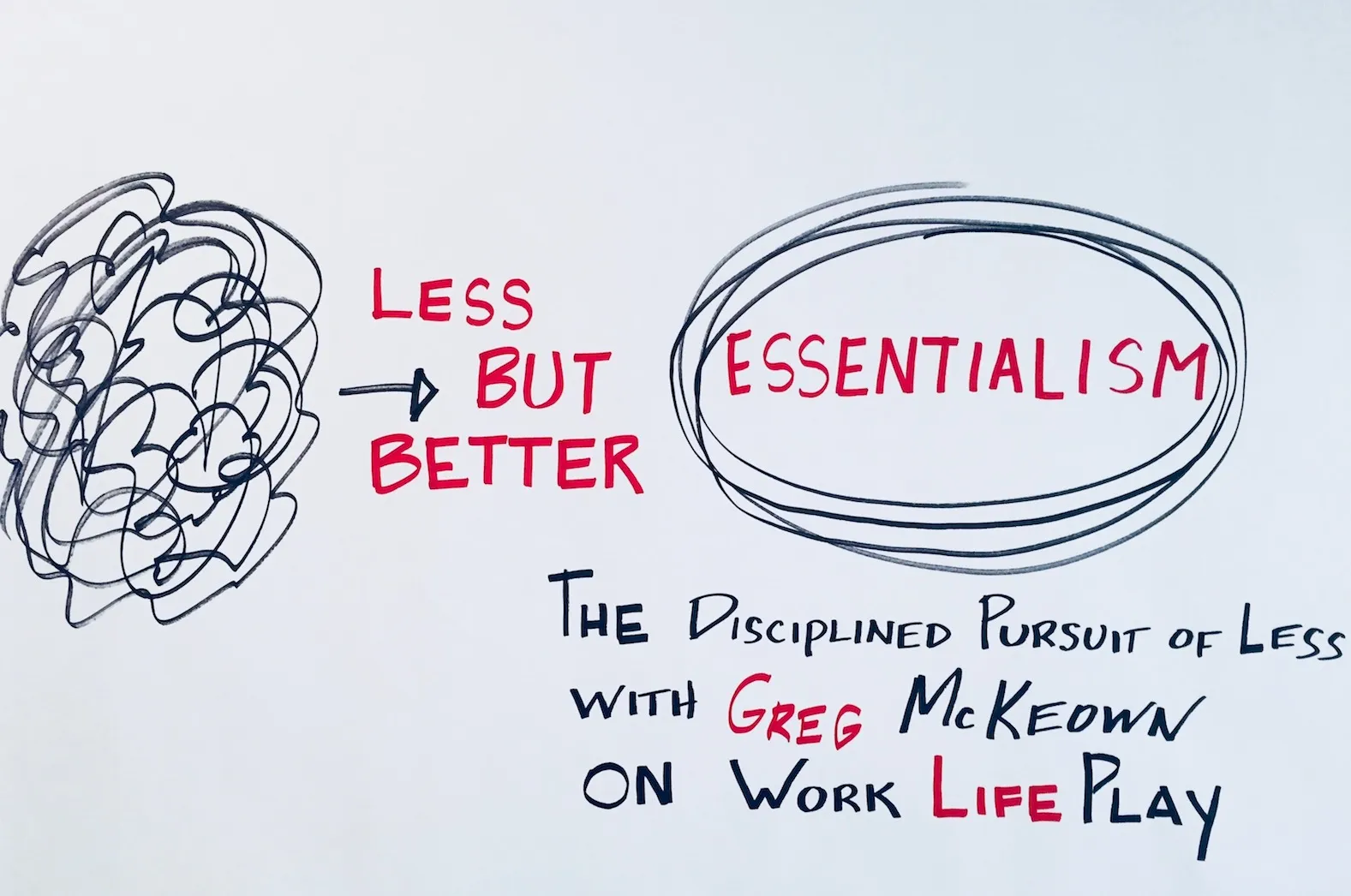
“Essentialism: The Disciplined Pursuit of Less” by Greg McKeown is a book that explores the concept of essentialism, a philosophy that emphasizes focusing on what truly matters and eliminating the non-essential. Here are the key takeaways from the book:
- The Core Principle of Essentialism: Essentialism is about doing less, but better. It involves identifying and focusing on the most important tasks, commitments, and goals, while eliminating distractions and non-essential activities.
- The Power of Saying No: McKeown emphasizes the importance of saying no to tasks, projects, and commitments that do not align with your highest priorities. By learning to say no, you create space for what truly matters.
- Discernment and Selectivity: Essentialism requires discernment—the ability to distinguish between what is truly essential and what is not. This involves being selective about where you invest your time and energy.
- Eliminating the Non-Essential: The book encourages a process of “editing” your life, where you remove unnecessary tasks, projects, and commitments. This allows you to focus on what is essential and achieve greater impact.
- The Value of Focus: Essentialism is about focus and concentration. By directing your energy toward a few important things, you can achieve better results and avoid spreading yourself too thin.
- Creating Boundaries: McKeown discusses the importance of setting boundaries to protect your time and energy. Boundaries help you maintain focus and prevent others from encroaching on your priorities.
- The Role of Intentionality: Essentialism is an intentional approach to life and work. It requires you to make deliberate choices about where to focus your efforts and to avoid defaulting to non-essential activities.
- The Power of Routine: Establishing routines and habits that align with your essential goals can help you maintain focus and discipline. McKeown suggests creating daily routines that support your essential priorities.
- Embracing the Disciplined Pursuit of Less: Essentialism is a disciplined approach that requires ongoing effort and commitment. It involves continually evaluating your commitments and making adjustments to stay focused on the essential.
- The Benefits of Essentialism: McKeown argues that by adopting essentialism, you can achieve greater clarity, reduce stress, and create more meaningful results. This approach allows you to lead a more fulfilling life and make a greater impact in your work and personal life.
Overall, “Essentialism” provides a framework for leading a more focused and meaningful life by embracing the philosophy of “less, but better.” By prioritizing the essential, saying no to the non-essential, and creating boundaries, individuals can achieve greater satisfaction and success.