
🎯 Main Premise
Donald Trump proposes a new U.S.-only missile defense system—called a “Golden Dome”—and offers Canada two options:
- Pay $61 billion (almost 3× its annual defense budget),
- Or join the U.S. as the 51st state.
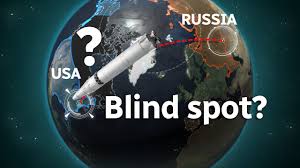
This raises the question: Can the U.S. realistically defend itself against northern threats without Canada’s help?
🧭 Why Canada Matters for U.S. Missile Defense
- Geographic Position:
- Most missiles from adversaries (Russia, China, North Korea, Iran) would fly over the Arctic and through Canada to reach the U.S.
- Canada’s northern landmass spans 25% of the Arctic Circle, making it a critical early warning zone.
- Radar Advantage:
- Ground-based radars in Canada’s Far North can track missiles 24 minutes before impact, versus only 6 minutes if located farther south.
- This extra time is crucial for deterrence, decision-making, and response.
🛰️ Canada’s Radar Systems & Investments
- NORAD Member Since 1958: Canada co-manages airspace defense with the U.S.
- Built 40% of the North Warning System.
- Currently investing tens of billions into two Over-the-Horizon (OTH) radar systems:
- Arctic OTH Radar
- Polar OTH Radar
- Operational by 2031–2033, offering thousands of km of advance detection.
🔭 Why Over-the-Horizon Radar is a Game-Changer
- Can detect threats far beyond the horizon by bouncing signals off the ionosphere.
- Can spot:
- Hypersonic missiles
- Bombers
- Warships
- Space-based threats
🇨🇦 Canada’s Autonomy within NORAD
- Although the systems support NORAD, Canada owns and controls its radar infrastructure.
- It decides how and when data is shared.
- This gives Canada influence and leverage in continental defense policy.
🔐 Conclusion: Interdependence, Not Dependence
- While Canada does rely on U.S. military power, the U.S. relies on Canada’s geography, infrastructure, and sensors to secure its northern flank.
- Continental defense is too complex and vast for the U.S. to handle alone.
- Trump’s ultimatum oversimplifies a deeply interdependent security relationship.

