
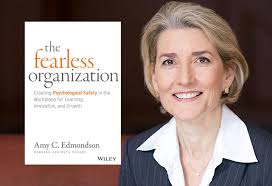
In The Fearless Organization: Creating Psychological Safety in the Workplace for Learning, Innovation, and Growth, Amy C. Edmondson explores the importance of fostering psychological safety in organizations to promote learning, innovation, and overall growth. Here are the key takeaways:
- Psychological Safety Defined: Psychological safety is a workplace environment where employees feel safe to take interpersonal risks without fear of punishment, embarrassment, or retribution. This allows them to speak up, share ideas, and admit mistakes without fear of negative consequences.
- Encouraging Open Communication: Edmondson emphasizes that open communication is essential for team performance and innovation. Leaders need to create an atmosphere where employees feel comfortable sharing their thoughts and concerns, fostering a collaborative and inclusive environment.
- Learning from Mistakes: A psychologically safe environment enables employees to acknowledge and learn from mistakes. Edmondson argues that mistakes should be seen as learning opportunities, which helps teams adapt, improve, and innovate.
- Promoting Innovation: Psychological safety is crucial for innovation, as it encourages employees to take creative risks and think outside the box. When people feel safe, they are more likely to contribute unique ideas and solutions that drive the organization forward.
- Building Trust and Respect: Trust and mutual respect are foundational to psychological safety. Leaders can foster these qualities by modeling vulnerability, actively listening, and respecting diverse perspectives. This creates a space where employees feel valued and respected.
- Reducing Fear in Decision-Making: In a psychologically safe organization, employees are not afraid of asking questions, challenging decisions, or expressing uncertainty. This leads to better decision-making as it incorporates multiple perspectives and addresses potential blind spots.
- Role of Leadership: Edmondson highlights that leaders play a critical role in establishing and maintaining psychological safety. They need to show humility, encourage feedback, and invite input from all team members. Leaders should also be transparent about their own uncertainties and model a learning mindset.
- Impact on Performance and Growth: Psychological safety directly impacts team performance, engagement, and job satisfaction. Employees who feel safe are more likely to be engaged, committed, and aligned with the organization’s goals, which leads to greater long-term success.
- Practical Strategies for Fostering Psychological Safety: Edmondson provides actionable strategies for building psychological safety, including encouraging curiosity, normalizing uncertainty, rewarding learning behavior, and recognizing contributions.
- Addressing Resistance and Building Change: Implementing psychological safety can face resistance, especially in traditional or hierarchical workplaces. Edmondson advises leaders to address these challenges gradually by building trust, demonstrating the benefits, and consistently reinforcing safe communication norms.
In The Fearless Organization, Edmondson makes a compelling case that psychological safety is a non-negotiable for modern workplaces that aim to be agile, innovative, and resilient. Creating such an environment not only benefits employees individually but also enhances organizational outcomes by fostering a culture of openness, continuous learning, and growth.